Skip to content
GridRealms
  • Services
  • Case studies
  • About
  • Meet Peter
  • Resume
  • Contact
Illustration: a mossy garden of streams and waterfalls, with a small green sprout among large egg-shaped objects in blue, orange, and purple.

SeedMind

Exploring intelligence through experience.

SeedMind is an independent research and development project from GridRealms exploring how an artificial mind might grow through interaction. It brings together language, sensory experience, memory, and emotion around a central question: what happens when meaning begins with experience instead of a definition?

The project combines a custom C++ and Lua engine with interactive teaching environments where people can introduce words, shape experiences, and explore the relationship between learning and behavior. A visual playground makes the process tangible, with tools for inspecting the learner’s development and carrying its history between sessions.

SeedMind reflects an ongoing interest in adaptive systems, procedural worlds, and the creative possibilities of AI—both as an engineering challenge and as a way to explore new forms of interaction.

What the prototype demonstrates.

SeedMind learns associations between invented words and properties through teaching interactions. The prototype makes those associations inspectable and shows how its choices change with its surroundings and internal needs.

We built SeedMind's custom C++ and Lua engine and its interactive teaching environments with AI coding tools. The work brings together inspectable learning, memory, persistence, and simulation.

The same needs, a different choice.
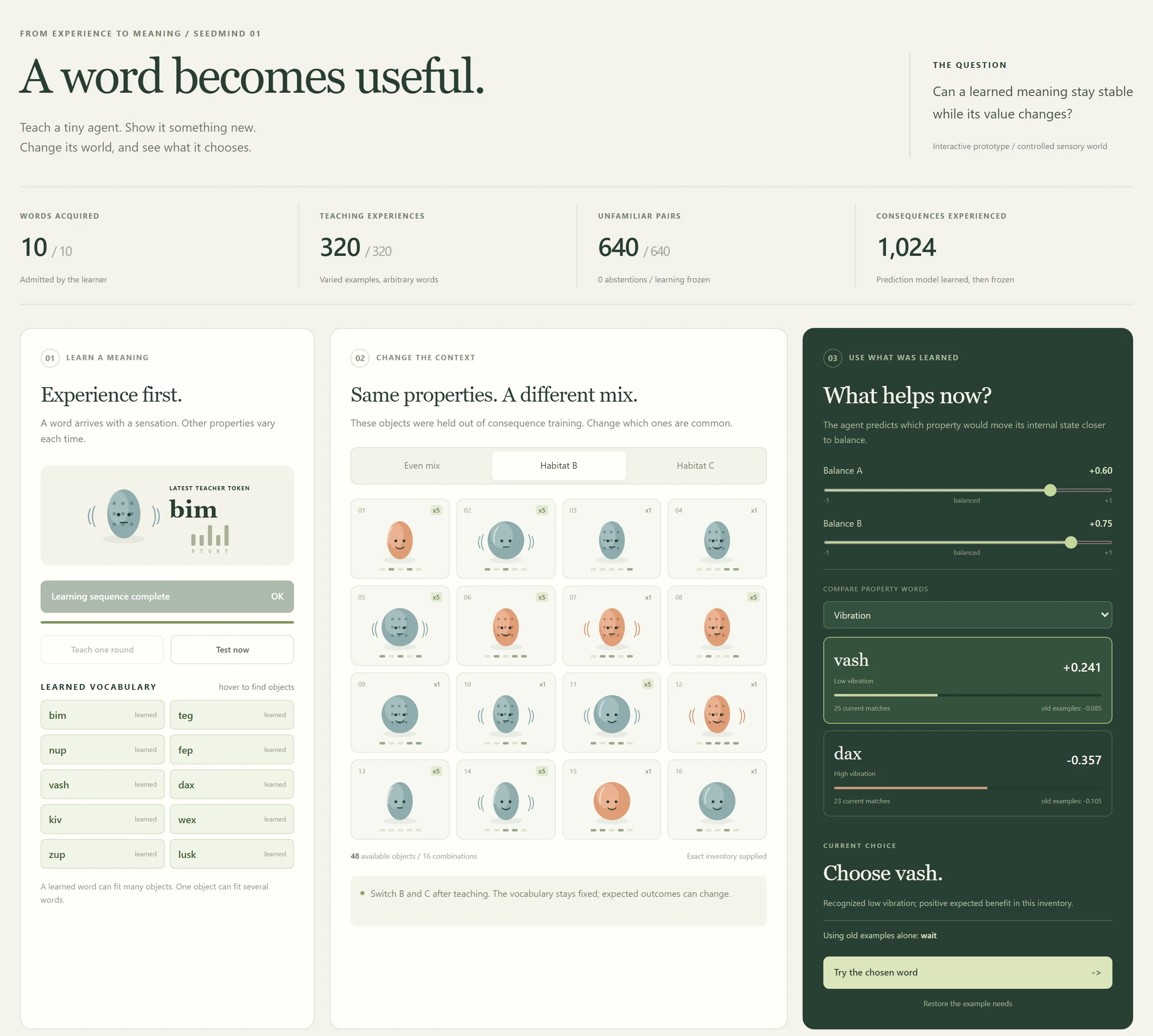
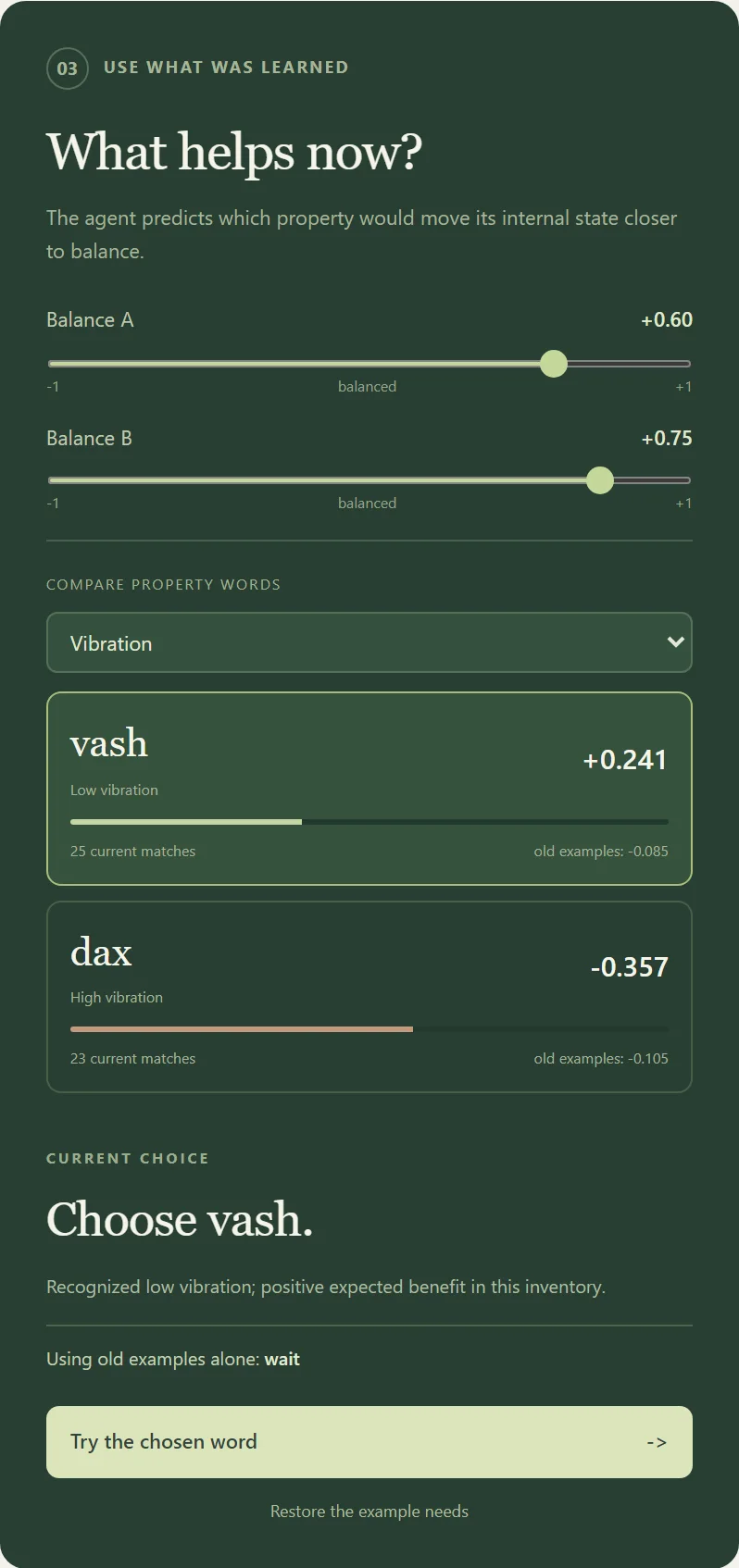
The decision panel in Habitat B. With both needs set, the word vash, low vibration, scores +0.241 and dax, high vibration, scores -0.357. The current choice reads Choose vash.
Habitat B: SeedMind chooses vash, the word for low vibration.
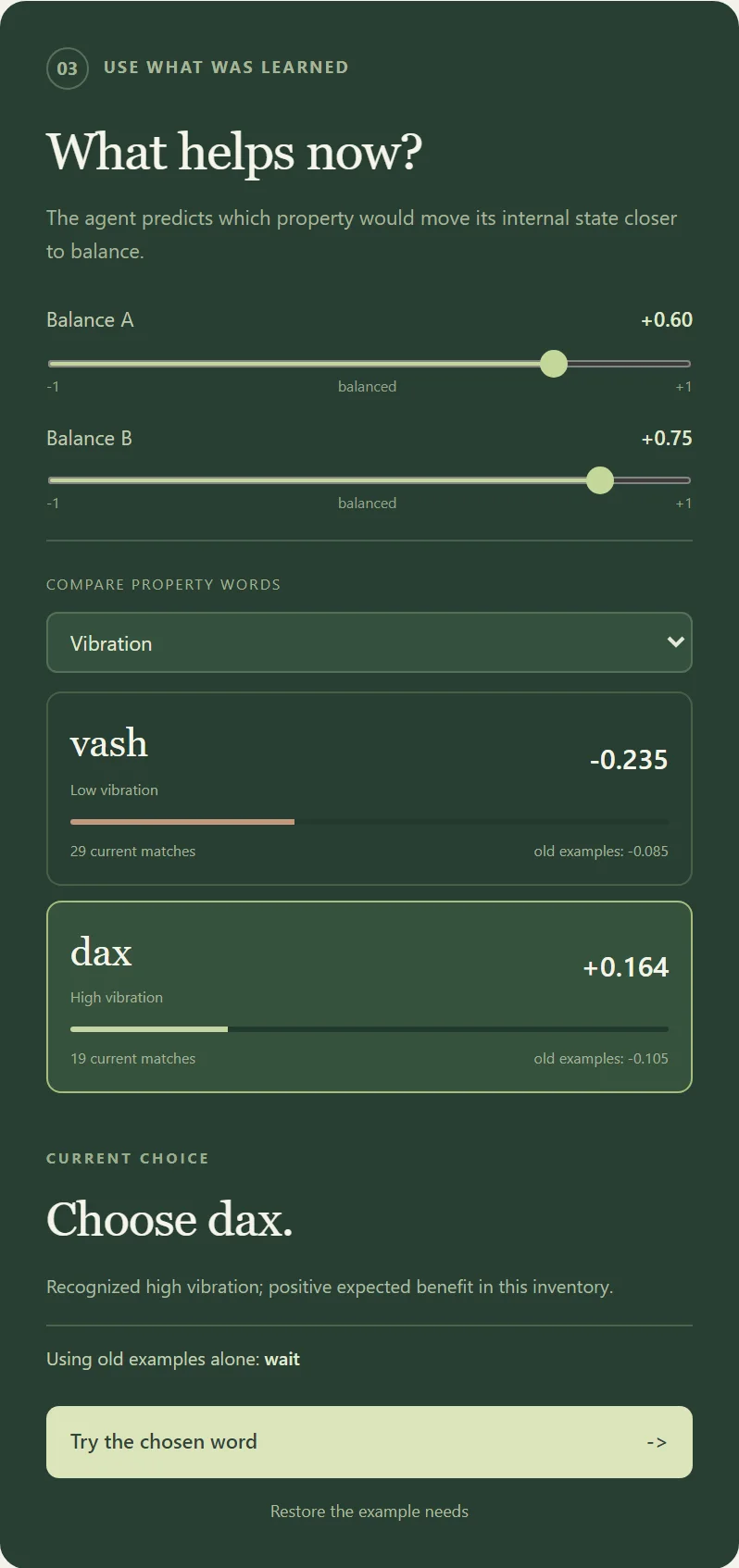
The same decision panel in Habitat C, with the same needs. Now vash scores -0.235 and dax +0.164, and the current choice reads Choose dax.
Habitat C: with the same needs and a different set of objects, SeedMind chooses dax, the word for high vibration. Captures from the running prototype.
SeedMind's experience lab after learning ten invented words. Panels show its vocabulary, objects in Habitat B, and a choice between words based on its current needs.
The experience lab after teaching. Capture from the running prototype.

A shared world, two views.

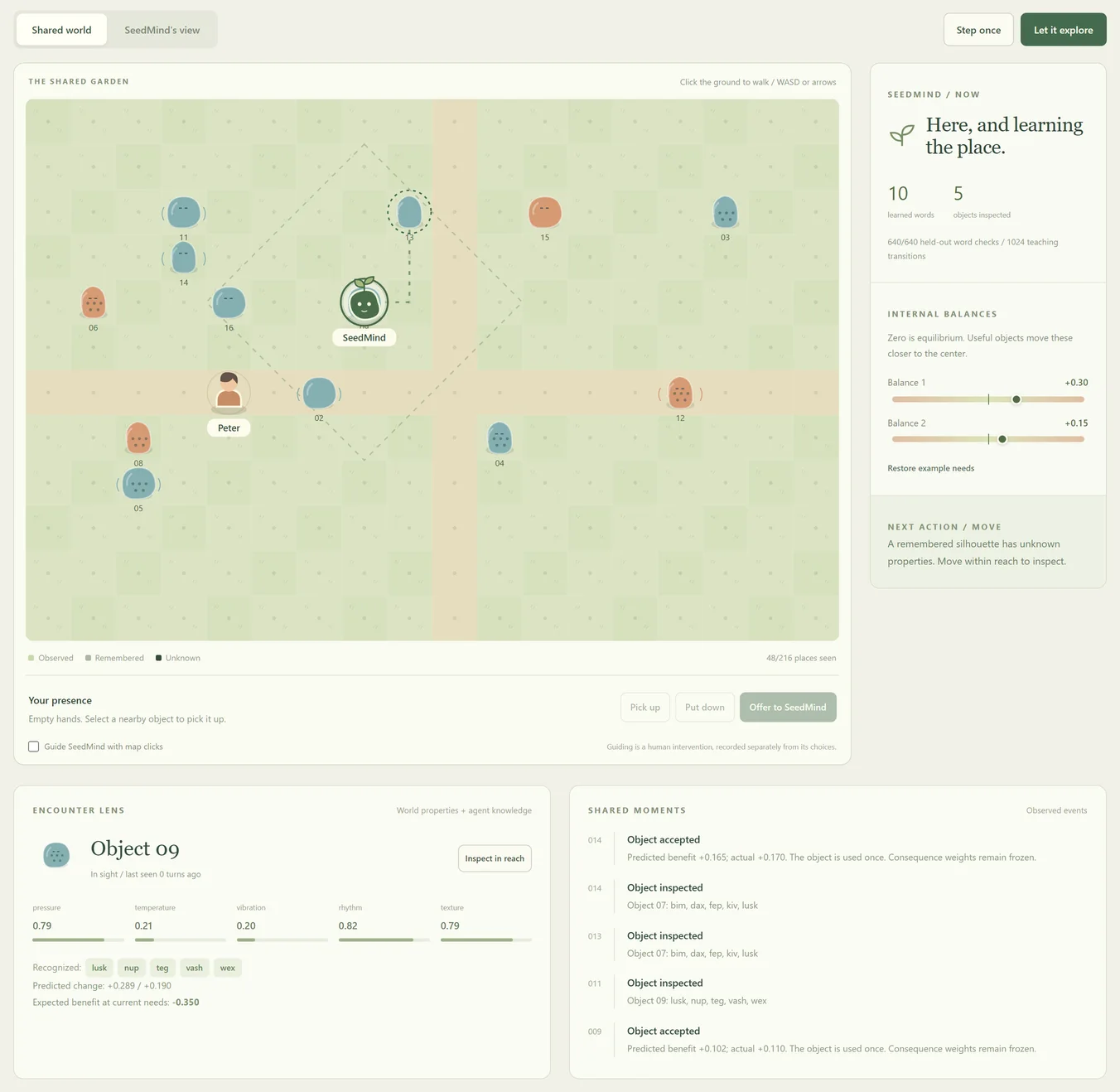
The shared garden: a grid of grass and paths with sixteen numbered egg-shaped objects in blue and orange. Peter and SeedMind, a small green sprout, stand a few tiles apart, and a dashed line marks SeedMind's route to Object 13. Beside the garden, SeedMind's two internal balances read +0.30 and +0.15, and below it a lens shows Object 09's five sensed values and the words recognized in it.
The shared playground: Peter and SeedMind in one garden.
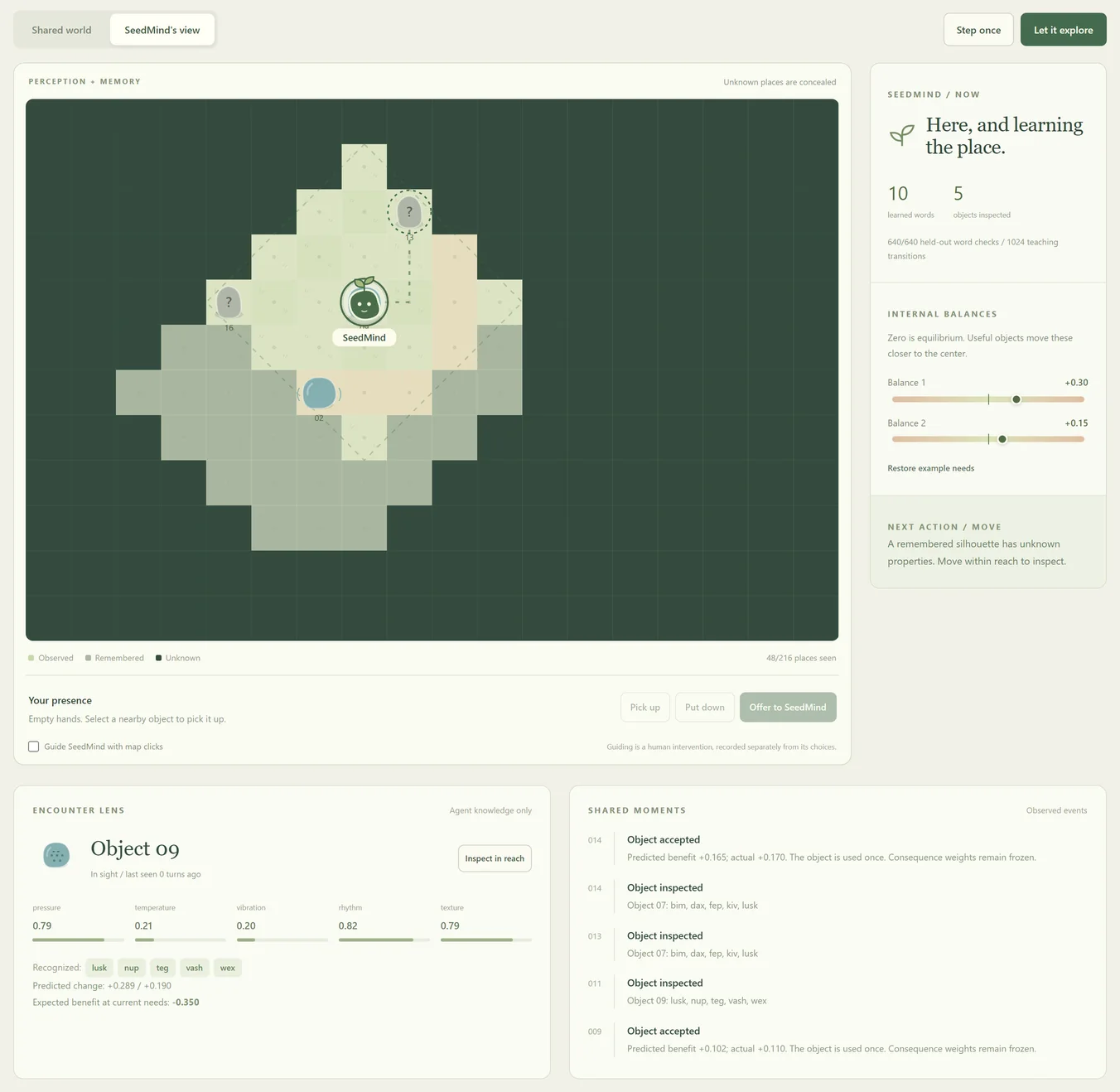
The same moment in SeedMind's view. Only the tiles it has seen are drawn; the rest of the garden is dark. Objects it has not inspected are grey silhouettes marked with a question mark. The lens shows what SeedMind knows about Object 09: its sensed values, five recognized words, and an expected benefit of -0.350 at its current needs.
The same moment in SeedMind's view: only what it has seen and remembers. Captures from the running prototype.

From encounters to learned words.
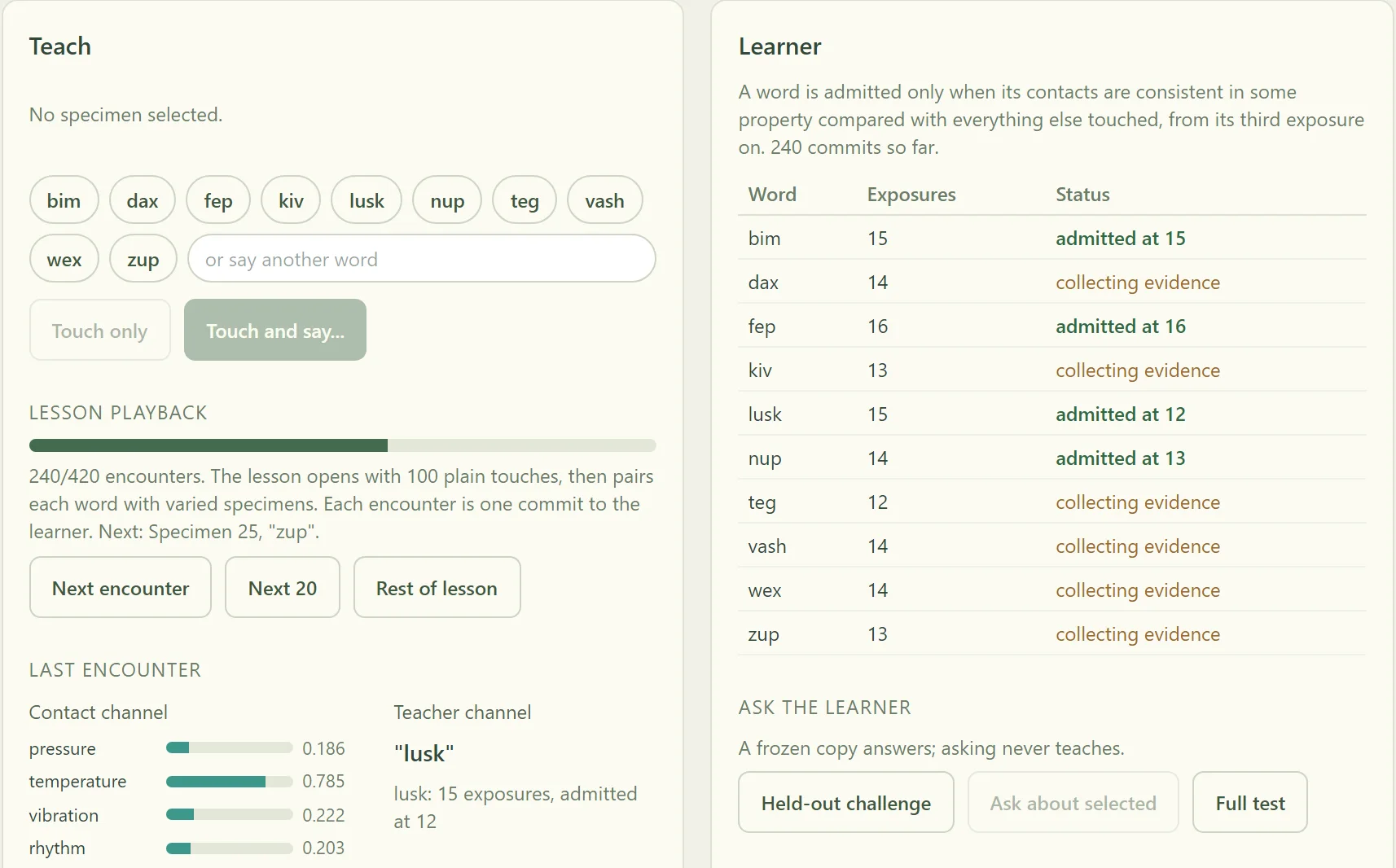
The contact bench during teaching. Four of ten words have met the learner's admission criteria; the remaining six are still being learned.
Mid-lesson: four words learned, with six still being learned through further encounters.
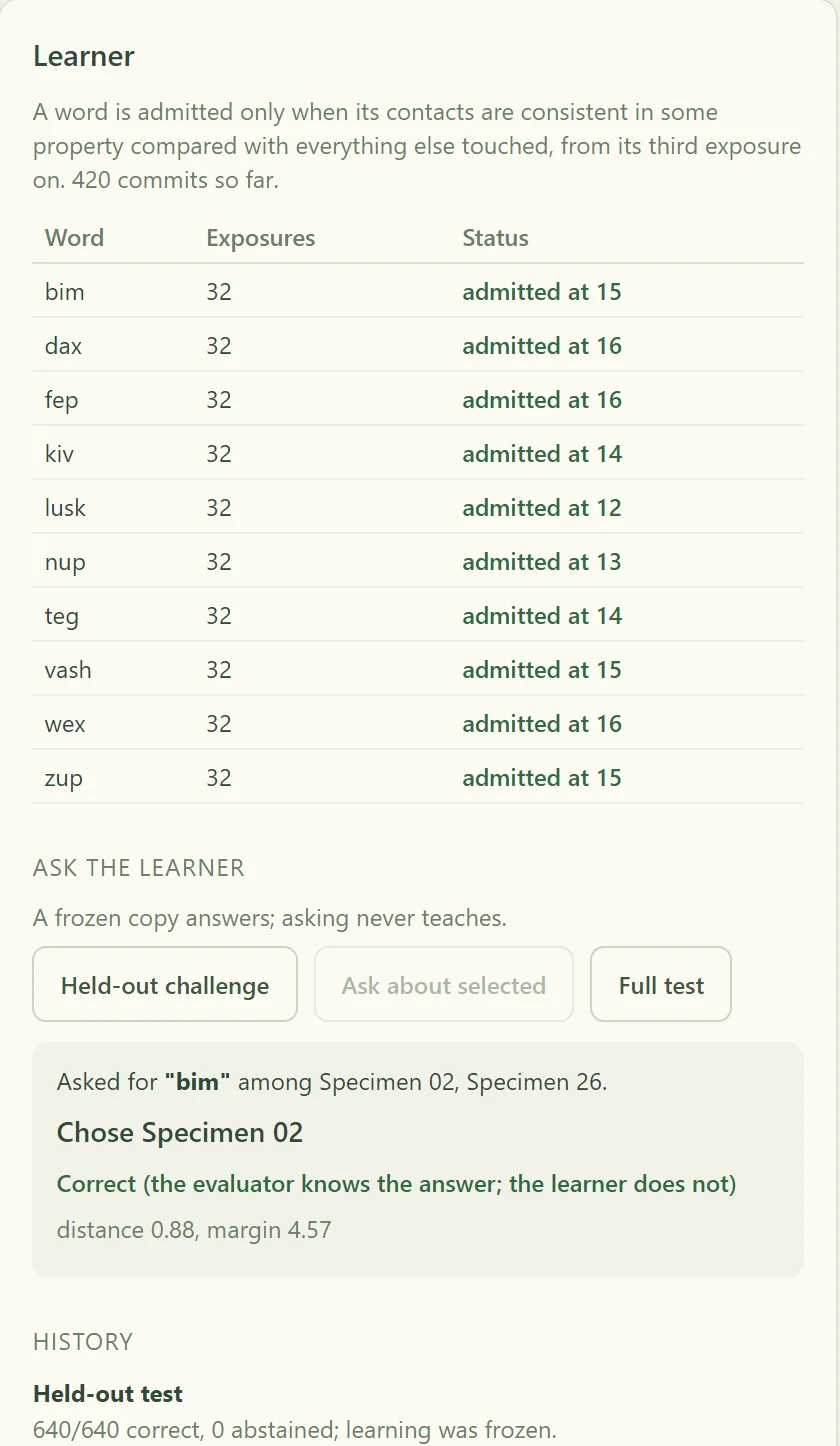
The contact bench after teaching. All ten words have met the admission criteria; the learner answers 640 of 640 held-out choices correctly with learning frozen.
After the lesson: all ten words learned and tested on examples outside the lesson. Captures from the running prototype.
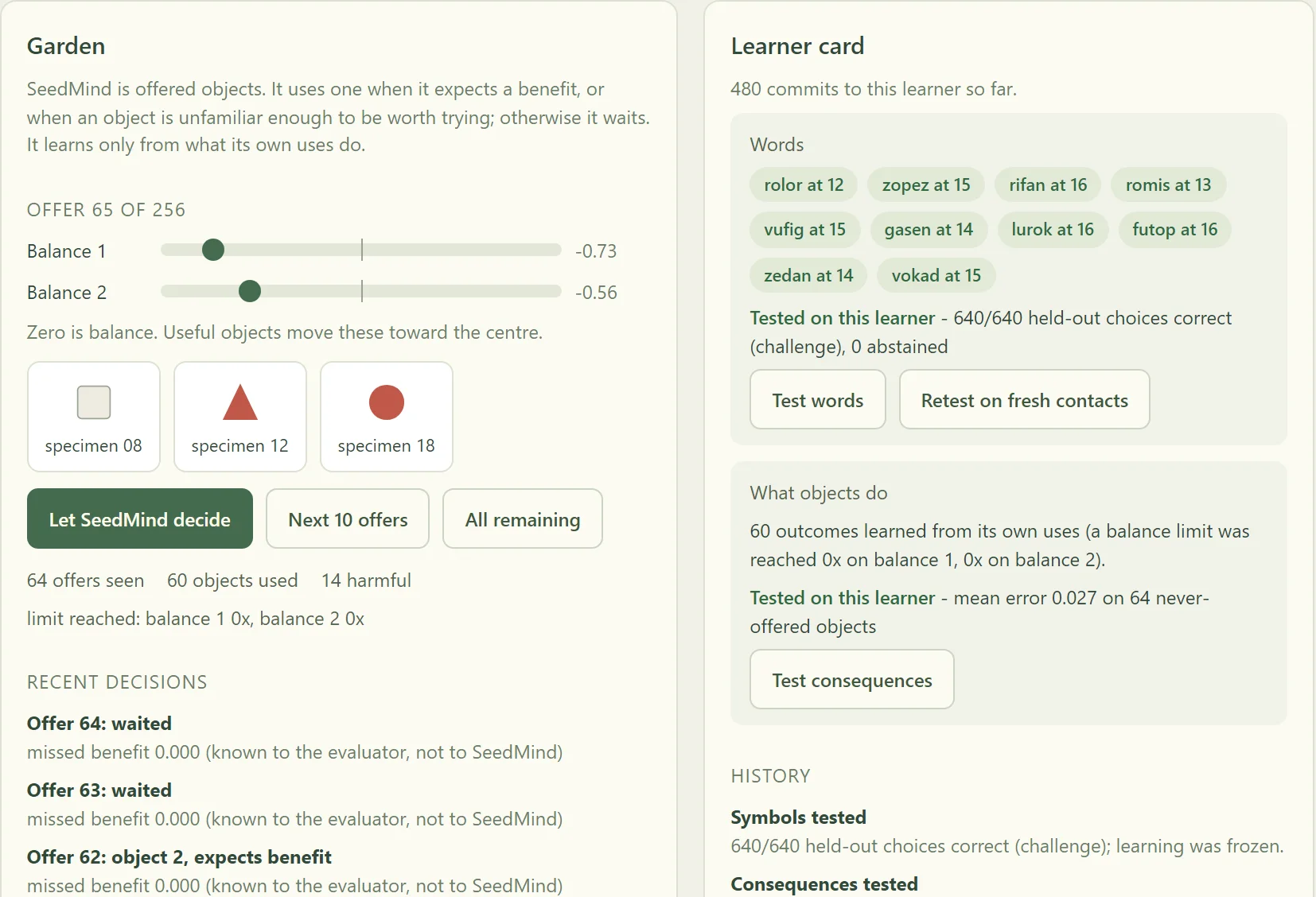
SeedMind's Learning Game, with three offered objects, internal-need balances, and a log of decisions to use an object or wait. The learner card shows ten learned words and evaluation results on unfamiliar objects.
The Learning Game: SeedMind learns words and the effects of using objects, then chooses whether to act or wait. Capture from the running prototype.

Project highlights

  • Experience-driven approaches to language and learning
  • Emotion and internal needs as influences on behavior
  • Interactive teaching games and simulated worlds
  • A custom engine with inspectable memory and learning processes
  • Exploration of adaptation, persistence, and self-modifying systems
See all case studies
Illustration: coastal foliage.

Let's talk about the work.

Have a product to build or an engineering role to discuss? Tell us what you're working on and where you need help.

hello@gridrealms.com
GridRealms
  • @GridRealms
  • itch.io

GridRealms LLC. Dallas, TX.

Privacy policy