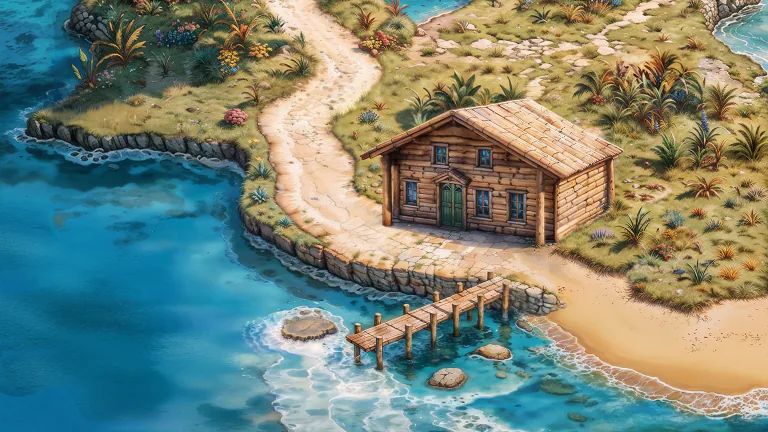
Aetheria: Adventurer's Puzzles
Coming to the web
Our story-driven match-3 RPG, released on Google Play as an Android open beta. Quests carry players through painted maps and story chapters, supported by account, social, and progression systems we built and operated.
- Developer
- Peter Metzger, GridRealms LLC
- Development
- January 2024 to July 2025
- Original release
- Android open beta on Google Play
From client to server.
We developed the game, released it, and ran the servers behind it.
Game systems
Built the online and social systems, purchases, localization, story chapters, lives, and currency around a Unity match-3 game. Retuned 94 levels, adjusting move limits, targets, board sizes, and star thresholds.
Online services
Developed Lua modules for sign-in, friends and gifts, leaderboards, player names, lives, currency, and purchase verification. Deployed and operated the backend using Nakama, PostgreSQL, Docker Compose, and nginx.
Art and story
Directed Aetheria's visual transformation and created eleven map paintings using AI-generated images reworked in Photoshop. Developed the story with AI assistance and integrated the art, interface, and audio into the game.
Development and release
Led AI-assisted implementation, connected the game's systems, and took the Android build and backend through release.
How it came to be.
Aetheria began as Plushie Planet in January 2024 and grew over about eighteen months of solo development into an adventure RPG with its own online services.
- January 2024
- We begin building the match-3 game that becomes Aetheria.
- Spring 2024
- We develop its painted maps and visual identity, then bring the game onto the Unity match-3 foundation used for release.
- Summer 2024
- Aetheria takes shape with a new look and its first online backend on PlayFab.
- Spring and summer 2025
- We rebuild the backend on Nakama and develop gifts, purchases, high scores, character creation, localization, and lives.
- July 2025
- Aetheria reaches its Android open beta on Google Play.
Match three, move the story on.
Aetheria is an adventurer on a journey to restore the balance between earth and sky. Every level is a puzzle, and every puzzle moves her further along the map.
A board with a goal
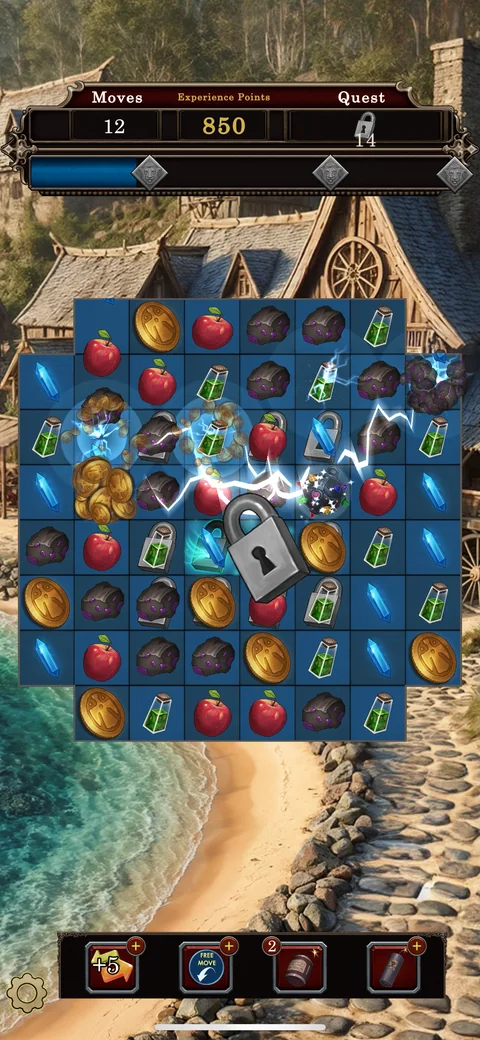
Swap and match pieces within a move limit. Each level sets a quest, such as a number of locks to clear, and matches earn experience points.
A map to travel
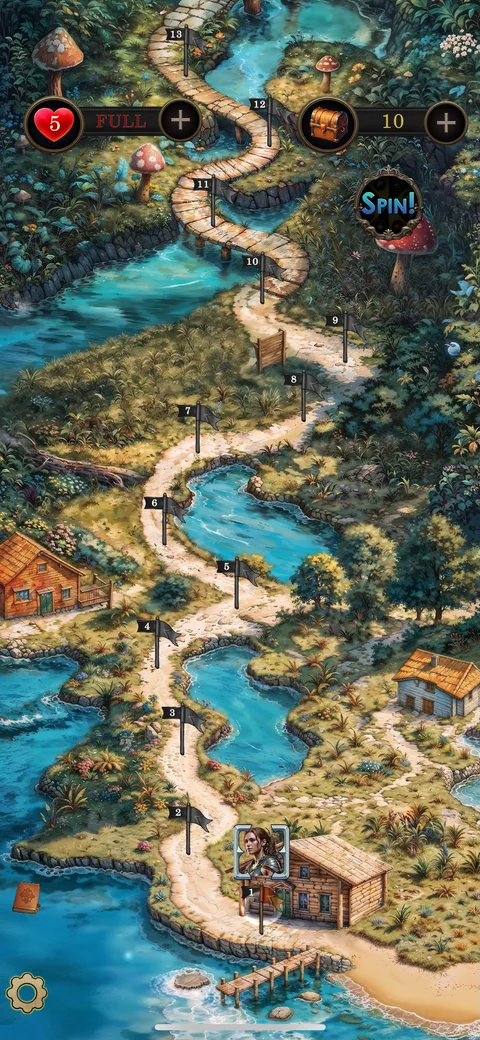
A numbered path carries players through a world of painted maps, from Windshore Village to the Snowy Mountains and SkyBorne Sanctuary.
Lives, coins, and boosters
The map tracks lives and coins. Each board offers four boosters, including extra moves and a free move.
The systems behind the adventure.
Unity handled the game experience. Nakama and Lua supported its online systems, with PostgreSQL for persistent data and Docker Compose and nginx for deployment.
Experience
Unity / C#
Gameplay, interface, and interaction. Everything the player touched.
Game services
Nakama / Lua runtime modules
Server modules for accounts, game rules, lives, currency, leaderboards, and purchase verification.
Persistent data
PostgreSQL
Server data stored between play sessions.
Deployment
Docker Compose / nginx
Containers and a reverse proxy for the self-hosted backend.
Follow one gift.
A player sends a friend a gift. Here is the whole trip, from the game through the server and back.
Unity / C#
The game checks how many gifts the player has left, then sends the gift to the server.
See the game send it
NakamaSocialGiftsService.cs // 1. Get current status and validatevar status = GetSendingStatus(recipientId);result.Status = status; if (!status.CanSend && !DebugBypassLimits){ result.SetError(status.BlockingReason ?? "Cannot send gift"); yield break;} // 2. Refresh server limits (unless in debug mode)if (!DebugBypassLimits){ yield return RefreshServerLimits(result); if (!result.Success) yield break;} // 3. Record send locally (optimistic)if (!DebugBypassLimits){ _domainData.RecordGiftSent(recipientId); yield return PerformSave(result); if (!result.Success) yield break; } // 4. Execute server RPCyield return ExecuteSendGiftRpc(recipientId, recipientName, result);Nakama / Lua
Server rules verify the player, the gift, and the friend, and hold everyone to five gifts every 12 hours, one per friend.
See the server's rules
02_social_features.lua -- Check limitsif current_send_count >= MAX_DAILY_GIFTS_SENT then return false, "Gift sending limit reached for this period"end -- Check if already sentfor _, rid in ipairs(recipients) do if rid == recipient_id then return false, "Already sent gift to this player this period" endendPostgreSQL
The gift lands in the friend's storage, ready to claim for 24 hours.
See the gift land
02_social_features.lua -- Create giftlocal gift_id = "gift_" .. nk.uuid_v4()local create_time = os.time()local expiry_time = create_time + GIFT_EXPIRY_SECONDS local gift_object = { collection = GIFTS_COLLECTION, key = gift_id, user_id = message.recipient_id, value = { sender_id = user_id, sender_name = message.sender_name or "A Friend", amount = amount, gift_type = message.gift_type, timestamp = create_time, expiry_time = expiry_time, consumed = false }, permission_read = 1, permission_write = 1} local write_success = pcall(nk.storage_write, {gift_object})Back to the game
The player's gift count updates, and the friend finds the gift waiting the next time they open their gifts.
See the game update
NakamaSocialGiftsService.cs // 5. Handle resultif (result.Success){ LogInfo($"Successfully sent gift to {recipientName}"); OnGiftSent?.Invoke(recipientId); OnDailyLimitReset?.Invoke(_domainData.DailyGiftsRemaining); NotifyDataChanged();}
Connected accounts and offline play.
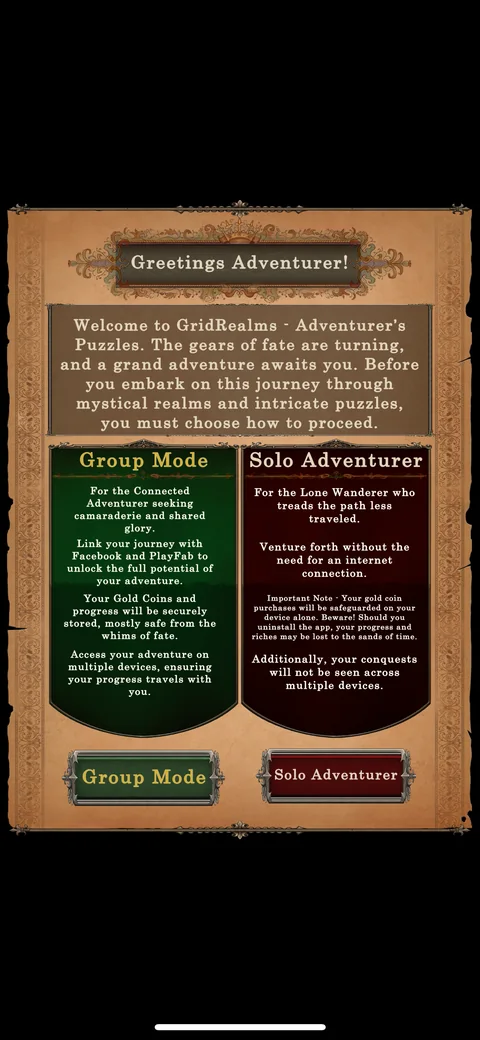
Players could link an account to share progress across devices or play offline in solo mode, with progress kept on that device.
Credits.
Aetheria was built on a third-party Unity match-3 template that supplied the board engine, level editor, base interface, and initial levels. It incorporates third-party art and audio, and its purchase verification adapts an open-source sample.
Coming to the web.
The original backend was retired in January 2026, and the game is currently unavailable. It is coming back as a game you play in your web browser; a return to the app stores is not planned.
Building a game with connected services?
Discuss it with us